


Processed Sisal Fibre Uses Benefits and Applications Guide
Sisal fibre starts as a tough leaf on the sisal plant, but it becomes far more useful after proper processing. Once extracted, cleaned, dried, brushed, graded, and packed, it can move into rope making, carpets, mats, agriculture, construction materials, and many other industries.
Sisal matters because it combines strength with natural origin. It is biodegradable, firm, and resistant to stretching. For manufacturers, importers, and distributors, the quality of processed sisal fibre affects product performance, production efficiency, and customer satisfaction.
This guide explains what processed sisal fibre is, how it is prepared, where it is used, and what to look for when buying it.

What processed sisal fibre means
Processed sisal fibre is natural fibre taken from the leaves of the sisal plant, Agave sisalana, then prepared for commercial or industrial use. Raw fibre straight from the leaf contains moisture, plant residue, and uneven strands. Processing removes much of this unwanted material and prepares the fibre for storage, transport, and manufacturing.
The level of processing depends on the buyer’s needs. Some buyers need long, clean fibre for spinning or rope production. Others need shorter fibre for fillings, composites, or specialised industrial products. The final product may differ in:
Fibre length
Colour
Cleanliness
Strength
Moisture level
Impurity content
Bale weight and packing style
Grade and consistency
A good batch of processed sisal fibre should be dry, reasonably uniform, and suitable for its intended use. Poor processing can lead to mould, breakage, uneven manufacturing, and more waste during production.
How sisal fibre is processed
The processing method may vary by producer, equipment, climate, and customer specification. Still, most commercial sisal fibre follows a similar path from field to bale.
Mature leaves are harvested
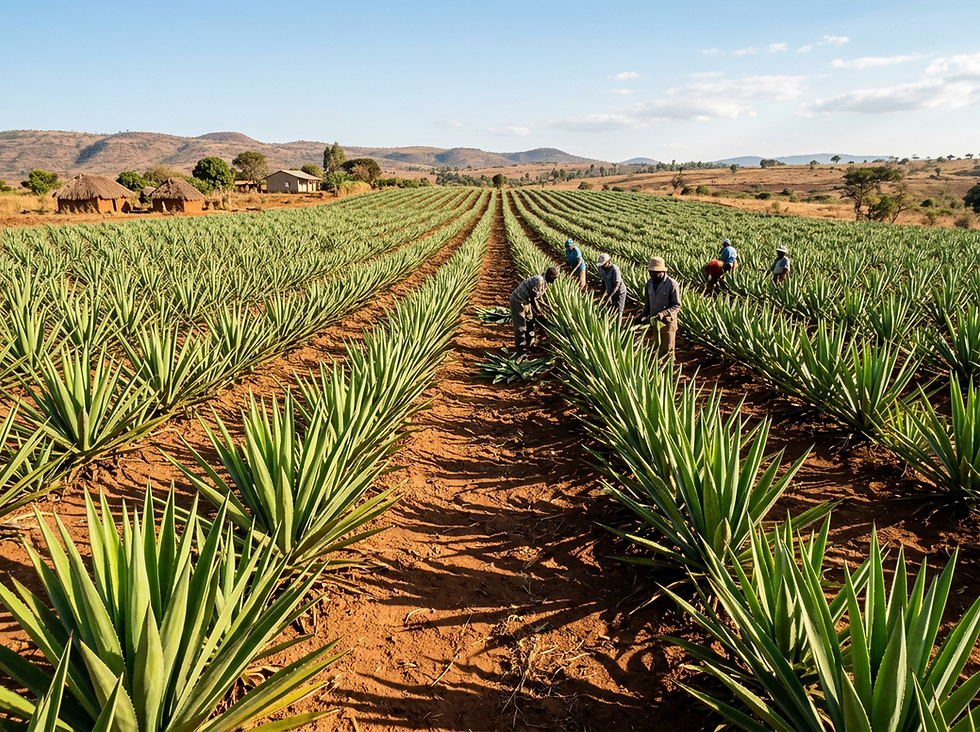
Sisal plants produce long, thick, sword-shaped leaves. Mature leaves are cut from the plant when they have developed enough fibre strength. The quality of the leaf affects the quality of the fibre, so harvesting should avoid very young, weak, or damaged leaves.
Harvested leaves are usually processed as soon as possible. Delays can affect cleanliness and fibre appearance, especially where the leaves begin to ferment or dry unevenly.
Fibre is extracted from the leaf
The main extraction process is called decortication. A decortication machine crushes and scrapes the fleshy part of the leaf away from the fibre. This separates the long strands from the green plant material.
This stage needs careful handling. If the machine is poorly adjusted, it can damage the fibre or leave too much pulp behind. Proper extraction gives a cleaner fibre and reduces the amount of work needed later.
The fibre is washed and cleaned
After extraction, the fibre may be washed to remove sap, leaf residue, and dirt. Washing improves colour and reduces impurities. Clean fibre is easier to grade and more suitable for products where appearance matters, such as carpets, mats, and decorative items.
Some industrial uses may tolerate slightly rougher fibre, but buyers still need consistent quality. Excess dirt or plant matter can affect processing machines and final product quality.
The fibre is dried
Drying is one of the most important stages. Sisal fibre must be dried to reduce moisture before baling and storage. If the fibre remains too damp, it can develop mould, smell unpleasant, or lose strength.
Drying is often done in the sun where weather allows. Producers may also use controlled drying methods when available. The goal is to dry the fibre evenly without making it too brittle.
The fibre is brushed and graded
Once dry, the fibre is brushed or combed to remove loose particles and align the strands. This improves appearance and makes the fibre easier to pack and use.
Grading follows. Fibre may be sorted by colour, length, cleanliness, and strength. Grading helps buyers choose the right material for the right application. For example, rope manufacturers may need long, strong fibre, while composite manufacturers may accept shorter fibre depending on the formulation.
The fibre is baled for transport
Processed fibre is compressed into bales for storage and shipment. Baling makes handling easier and reduces transport space. Each bale should be packed in a way that protects the fibre from moisture, contamination, and unnecessary damage.
Clear labelling also matters. Buyers often need details such as grade, weight, origin, and batch information.
Main uses of processed sisal fibre
Sisal is valued because it performs well in tough, practical products. Its rough texture and tensile strength make it suitable for many uses, from household goods to industrial materials.
Rope and twine manufacturing
Ropes and twines are among the best-known sisal products. Processed sisal fibre is strong, firm, and holds knots well. It is commonly used for:
Agricultural twine
Marine and general-purpose ropes
Packaging twine
Garden ties
Craft rope
Utility cordage
Sisal rope has a natural look and firm grip. It is popular where biodegradability and strength are both useful. It may not suit every wet or high-abrasion setting, so buyers should match the rope specification to the working conditions.
Carpets, rugs, and mats
Processed sisal fibre is widely used in floor coverings. Its coarse texture creates durable mats and rugs with a natural finish. Sisal carpets are often chosen for areas that need a firm, textured surface.
Common products include:
Door mats
Area rugs
Wall-to-wall natural fibre carpets
Floor runners
Decorative woven mats
Clean, well-graded fibre is important for these uses because colour and consistency affect the final look. Fibre used in carpets should have good length, good strength, and low levels of visible impurities.
Agriculture and horticulture products
In farming and gardening, sisal is useful because it is natural and biodegradable. It can support plants, tie crops, and serve as a natural binding material.
Typical agricultural uses include:
Crop tying
Hay and bale twine
Tree support ties
Nursery and landscaping applications
General farm binding
Sisal twine is especially useful where plastic waste is a concern. Since it comes from plant fibre, it can break down naturally over time under suitable conditions.
Brushes and polishing products
Sisal fibre can be stiff enough for brushes, buffing wheels, and polishing products. Its roughness helps with cleaning, scrubbing, and surface preparation.
In industrial settings, sisal may be used in polishing wheels for metal, wood, or other materials. The exact fibre requirements depend on the product design. Stiffer, cleaner fibre usually performs better where friction and durability matter.
Composite and construction materials
Sisal fibre is also used as reinforcement in composite materials. It can be mixed with resins, cement-based materials, or other binders to improve strength and reduce reliance on synthetic fibre.
Examples include:
Fibre-reinforced panels
Plaster reinforcement
Cement composite products
Automotive interior parts
Packaging boards
Acoustic and insulation materials
The use of natural fibres in composites continues to grow as manufacturers look for lighter and more sustainable inputs. Sisal is attractive because it is relatively strong, renewable, and widely available in producing regions.
Paper, padding, and speciality products
Lower-grade or shorter sisal fibre can still be useful. It may be used in paper production, stuffing, padding, and other products where long, premium fibre is not required.
This helps reduce waste in the supply chain. Not every strand needs to become rope or carpet. Different grades can serve different markets, which improves the value of the crop.

Benefits of processed sisal fibre
Processed sisal fibre offers several advantages for manufacturers and end users. Its value comes from both performance and sustainability.
It is strong and durable
Sisal is known for good tensile strength. This makes it suitable for ropes, twines, mats, and reinforcement products. It can handle pulling and everyday wear better than many softer natural fibres.
Strength depends on grade, processing quality, fibre length, and moisture control. Well-processed fibre gives manufacturers more predictable results.
It is biodegradable and renewable
Sisal comes from a plant source and can biodegrade under natural conditions. This makes it useful for buyers seeking alternatives to some synthetic materials, especially in agriculture, packaging, and natural home products.
The sisal plant also grows in dry regions where some crops may struggle. This gives it value in parts of East Africa and other sisal-producing areas.
It has a natural texture and appearance
Sisal has a firm, earthy texture that works well in mats, rugs, baskets, and decorative products. It accepts dyes, but many buyers prefer its natural colour range, from creamy white to light brown.
For consumer products, appearance matters. Clean processing and careful grading help create a more attractive final product.
It supports many industries
One of sisal’s strengths is versatility. The same crop can supply fibre for ropes, carpets, brushes, composites, paper, and agricultural products. This creates demand across different markets and allows producers to serve several buyer types.
It can reduce reliance on synthetic materials
Sisal cannot replace synthetic fibres in every use. Still, it offers a practical natural option for many products. For businesses seeking more natural inputs, processed sisal fibre can be a good fit when strength, texture, and biodegradability matter.
Common grades and quality factors to check
Not all sisal fibre is the same. Buyers should assess the fibre based on the intended use rather than assuming one grade fits all products.
Quality factor | Why it matters |
Fibre length | Longer fibre is usually preferred for spinning, rope, and high-quality woven products. |
Colour | A lighter, cleaner colour is often preferred for carpets, rugs, and visible products. |
Moisture level | Excess moisture can cause mould, weight disputes, and storage problems. |
Cleanliness | Dirt, pulp, and foreign matter can affect machinery and final product quality. |
Strength | Strong fibre performs better in ropes, twines, and reinforcement uses. |
Consistency | Uniform fibre helps manufacturers reduce waste and maintain product standards. |
Packing | Good baling protects fibre during storage and transport. |
For importers and distributors, consistency is often just as important as grade. A buyer may accept a certain grade if it arrives reliably, matches the agreed specification, and performs well in production.
What to consider before buying processed sisal fibre
Buying sisal fibre is easier when the specification is clear. Vague orders can lead to disputes over colour, moisture, grade, or bale condition.
Before placing an order, define the following:
Intended use Rope, carpet, composite, brush, and padding manufacturers may all need different fibre qualities.
Preferred grade Ask for the grade that matches the product, not simply the highest grade available.
Fibre length range Length affects spinning, weaving, and strength.
Moisture expectations Agree on acceptable moisture levels and inspection methods where possible.
Impurity tolerance Clean fibre costs more, but it can reduce processing problems.
Bale weight and packing Confirm bale size, wrapping, labelling, and loading requirements.
Documentation For export, check invoices, packing lists, certificates, and any import rules in the destination market.
Sampling is also helpful. A small sample lets the buyer check texture, colour, smell, cleanliness, and strength before committing to a larger shipment.
Storage and handling tips
Even good fibre can lose value if stored badly. Sisal should be kept dry, clean, and protected from contamination.
Use these basic handling practices:
Store bales in a dry, well-ventilated space.
Keep fibre off bare floors where moisture can rise.
Protect bales from rain during loading and unloading.
Avoid contact with oils, chemicals, and strong odours.
Rotate stock so older bales are used first.
Inspect for mould, pests, and water damage before production.
Moisture is the biggest storage risk. If fibre absorbs water, it can stain, weaken, or develop mould. This is especially important during rainy seasons and sea transport.
Limitations of sisal fibre
Sisal is useful, but it has limits. Understanding those limits helps buyers use it well.
It can feel coarse, which may not suit soft-touch textile products. It can also absorb moisture, so it needs proper storage and may not perform well in every wet environment. Like many natural fibres, it can vary in colour and texture from batch to batch.
Natural variation is not always a defect. Still, manufacturers need clear specifications when uniformity is critical.
Why processed sisal fibre remains valuable
Processed sisal fibre continues to serve both traditional and modern industries. It has a long history in ropes and mats, yet it also has a place in newer uses such as natural fibre composites, sustainable packaging, and reinforced materials.
Its value comes from a simple combination: it is strong, plant-based, widely usable, and suitable for many manufacturing processes after proper preparation. For buyers, the best results come from matching the fibre grade to the application, checking quality before purchase, and storing it correctly after delivery.
Sisal may be an old fibre, but it remains practical. When it is well processed, it becomes a reliable raw material for products that need strength, texture, and a natural origin.


Comments