


Sisal Fibre Journey From Agave Plant To Versatile Eco Friendly Products
A coil of sisal rope looks simple, but it carries a long story. It begins as a thick, sword-shaped leaf on a hardy plant, then passes through cutting, scraping, washing, drying, sorting, spinning, and weaving before it becomes a rope, mat, sack, brush, twine, or reinforcement material.
Sisal fibre is one of the best-known natural fibres in the world because it is strong, tough, and useful across many industries. It comes from the leaves of the Agave sisalana plant, a drought-tolerant crop that grows well in warm, dry regions, including parts of Kenya and other tropical and subtropical areas.
What makes sisal interesting is not only its strength. It is also renewable, biodegradable, and often less demanding on the environment than many synthetic materials. Its journey from plant to product shows how agriculture, processing skill, and practical design can meet in one fibre.

What sisal fibre is and where it comes from
Sisal fibre is a natural plant fibre extracted from the leaves of Agave sisalana. The plant is often mistaken for aloe because of its sharp, fleshy leaves, but it belongs to the agave family. Each mature leaf contains long, pale fibres held inside a pulpy green structure.
The useful fibre is found along the length of the leaf. Once separated from the leaf pulp, the strands become firm, coarse, and highly resistant to stretching. This is why sisal has long been used for ropes, baler twine, carpets, sacks, brushes, and many hard-wearing goods.
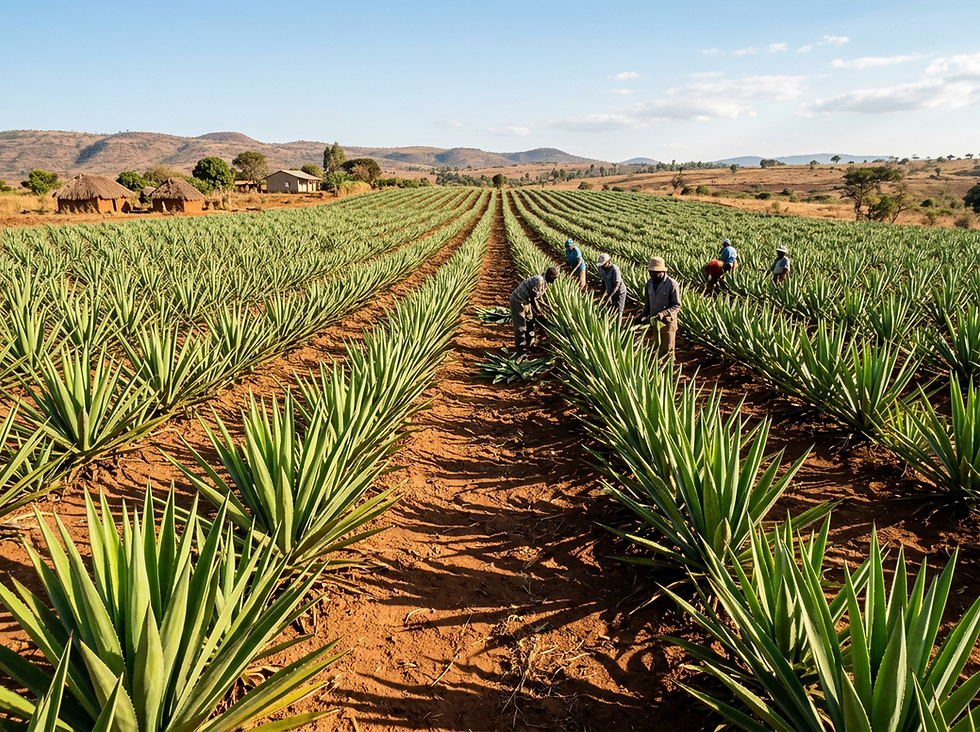
The Agave sisalana plant suits dry climates because it stores water in its leaves and tolerates poor rainfall better than many crops. It grows in a rosette form, with new leaves forming from the centre as older leaves spread outward. When the plant reaches a suitable level of maturity, workers harvest the outer leaves while allowing the plant to keep growing.
This repeated harvesting makes sisal different from crops that must be uprooted each season. A productive plant can provide leaves over a period of years, depending on growing conditions and farm management.
The journey starts with harvesting mature leaves
Harvesting is the first major step in turning sisal from plant to product. Workers cut mature leaves close to the base using sharp tools. The goal is to select leaves that have developed enough length and fibre content without damaging the growing centre of the plant.
Good harvesting practice matters because fibre quality begins in the field. Leaves that are too young may produce weaker or shorter fibres. Leaves that are over-aged or damaged may give fibre with stains, breaks, or uneven texture.
After cutting, leaves are usually transported quickly to a processing area. Speed is useful because fresh leaves are easier to process. If they sit for too long, the pulp can begin to dry or ferment, making extraction harder and affecting the colour and quality of the fibre.
At this early point, the material still looks nothing like the finished products people know. It is heavy, green, wet, and full of plant pulp. The strong fibre is hidden inside.
Fibre extraction separates strength from pulp
The main extraction stage removes the fleshy part of the leaf and frees the fibres. This process is often called decortication. In simple terms, the leaf is crushed and scraped so the soft tissue falls away, leaving behind long strands.
Traditionally, extraction could be done by hand, but commercial processing usually uses machines. The leaves are fed into a decorticator, where rotating blades or beaters scrape away the green pulp. What comes out is a mass of wet, pale fibres.
This stage must balance force and care. Too little scraping leaves pulp attached to the fibre. Too much force can cut or weaken the strands. Skilled operators look for fibre that is clean enough to move to washing but still long and intact.
The by-products from extraction, including pulp and liquid waste, can be managed in different ways. In some systems, plant residue may be composted or returned to the soil after suitable handling. Good waste management helps reduce environmental impact and supports more circular use of the crop.

Cleaning removes pulp and prepares the fibre
After extraction, the fibre still contains moisture, plant sap, and small pieces of leaf tissue. Cleaning helps remove these residues. The fibre may be washed in clean water or passed through systems that rinse away remaining pulp.
Clean fibre is easier to dry, grade, store, and process. It also has a brighter appearance and a more consistent feel. Poor cleaning can leave stains, odours, or weak spots, especially if plant material remains trapped in the strands.
Washing is a practical step, but it also requires care. Water use should be managed responsibly, especially in dry regions where sisal often grows. Processing sites that reuse water where possible and handle wastewater properly can reduce pressure on local water resources.
Once cleaned, the fibre is ready for drying. At this point it is still damp and flexible. It must lose moisture before it can be sorted, packed, or turned into finished goods.
Drying gives sisal its stable form
Drying is a simple-looking stage with a big effect on final quality. Sisal fibre is commonly spread out in the sun on drying lines, racks, or clean surfaces. The aim is to remove enough moisture to prevent mould, staining, and decay during storage.
Good drying needs exposure to air and sunlight, but the fibre should stay clean. If it comes into contact with soil, dirty surfaces, or plant debris, it can pick up impurities. If it dries unevenly, some parts may remain damp while others become brittle.
Weather plays a major role. Sunny, breezy conditions help fibre dry evenly. Wet weather can delay the process and increase the risk of discolouration. In larger operations, workers may turn or shake the fibre during drying so the strands separate and dry more consistently.
Dried sisal has the familiar pale cream to light yellow colour associated with many finished products. It is lighter, firmer, and easier to handle than the wet fibre that first comes from the extraction stage.
Grading sorts fibre by quality and use
Once dry, sisal fibre is graded. Grading sorts fibres according to features such as length, colour, cleanliness, strength, and uniformity. This matters because not every product needs the same type of fibre.
Long, clean, strong fibre may be selected for ropes, twines, and export-grade products. Shorter or lower-grade fibres may still have value in products such as padding, brushes, paper pulp blends, or composite materials.
A simple way to understand grading is to think of it as matching fibre to purpose. A rope used in agriculture needs strength and grip. A woven mat needs texture and consistent appearance. A packaging product may need toughness, but not necessarily the best colour.
Common grading factors include:
Length
Longer fibres are useful for spinning into yarns, ropes, and twines.
Colour
Clean, bright fibre is often preferred for visible products such as mats and decorative goods.
Cleanliness
Fibre with less pulp, dust, and foreign matter is easier to process.
Strength
Strong fibre performs better in load-bearing uses such as ropes and agricultural twine.
Uniformity
Even fibre helps manufacturers produce consistent finished goods.
After grading, the fibre is usually baled for transport or storage. From there, it moves to mills, workshops, factories, or craft producers.

How sisal becomes useful products
The sisal fibre journey does not end with bales of graded fibre. The real value appears when the fibre is twisted, spun, woven, pressed, brushed, or blended into finished products.
Sisal’s natural stiffness and strength make it useful in many forms. It can be rough and durable, or processed into goods that look clean and decorative. This range explains why the fibre remains relevant even with many synthetic alternatives available.
Processed sisal product | Common applications |
Rope and cordage | Farm work, general tying, marine use where natural fibre is preferred, and household tasks |
Baler twine | Binding hay, straw, and other agricultural materials |
Sacks and bags | Packaging agricultural produce and dry goods |
Mats and rugs | Flooring, entry mats, wall coverings, and decorative interiors |
Brushes | Scrubbing brushes, polishing brushes, and industrial brush heads |
Yarn and woven fabric | Craft items, baskets, bags, and home accessories |
Fibre padding | Mattresses, cushioning, and upholstery support layers |
Composite reinforcement | Boards, panels, and moulded items where natural fibres add structure |
These products show why sisal sits between farming and manufacturing. It is an agricultural material, but its value grows through processing and design.
Sisal in agriculture
Agriculture is one of the most traditional markets for sisal. Farmers use sisal twine and rope because the fibre grips well and holds knots firmly. Baler twine made from sisal can bind hay, straw, and other crop materials.
Sisal ropes also serve general farm needs, such as tying loads, supporting plants, securing tools, or bundling harvested goods. The fibre handles rough use well, and its natural texture gives it good friction.
In crop packaging, sisal sacks and woven materials may be used for dry produce and farm supplies. They offer breathability, which can be useful for some agricultural goods that should not be sealed in plastic for long periods.
Sisal in manufacturing
Manufacturers value sisal because it is strong, coarse, and adaptable. In rope making, fibre is combed, aligned, and twisted into yarns and strands. These strands are then twisted again to form ropes of different thicknesses.
In brush making, shorter or stiffer fibres can be fixed into wooden, plastic, or metal backs to create scrubbing and polishing tools. Sisal brushes are common where a firm natural bristle is needed.
Sisal can also be used in composite materials. When mixed with suitable binders, it can help reinforce boards, panels, and moulded items. These uses are part of a wider interest in plant fibres as alternatives to fully synthetic reinforcement materials.
In homes and interior products, sisal is woven into mats, carpets, baskets, lampshades, and wall coverings. Its texture gives products a natural look without heavy processing.
Sisal in packaging
Packaging is another area where sisal has strong practical value. Natural fibre packaging can be useful where strength, breathability, and biodegradability matter.
Sisal can appear in:
Produce sacks
Twine for bundling goods
Protective wrapping
Woven shopping bags
Gift packaging
Cushioning or filling materials
Plastic packaging is light and cheap, but it creates waste problems when used once and discarded. Sisal does not solve every packaging challenge, but it gives producers another material option, especially for goods that suit breathable, reusable, or compostable packaging formats.

Why natural sisal can be better than synthetic materials
Synthetic materials such as polypropylene and nylon have their place. They can be very strong, water-resistant, and consistent. Still, natural sisal offers clear benefits in many uses.
The biggest advantage is that sisal comes from a renewable plant source. The Agave sisalana plant grows leaves that can be harvested repeatedly over its productive life. When managed well, sisal farming supports a cycle of planting, harvesting, processing, and regrowth.
Sisal is also biodegradable. A sisal rope or sack will break down far more naturally than many plastic-based alternatives. This matters for agriculture, packaging, and products likely to wear out through regular use.
Other benefits include:
Lower plastic dependence
Using sisal can reduce reliance on petroleum-based materials in suitable applications.
Good grip and knot strength
Sisal’s rough surface helps ropes and twines hold well.
Breathability
Woven sisal packaging allows air movement, which can help with some dry agricultural products.
Natural appearance
Sisal has a warm, textured look that works well in homeware and craft products.
Useful end-of-life options
Untreated sisal products are easier to compost or dispose of naturally than many synthetic goods.
There are limits. Sisal can absorb moisture, and it may degrade faster than synthetic fibres in wet conditions. For outdoor use, marine settings, or heavy industrial applications, the right treatment and product choice matter. The best material depends on the job.
Still, when a product needs strength, grip, texture, and a lower-plastic profile, sisal is often a strong candidate.
The value of sisal is in the whole chain
The story of sisal is not only about a plant. It is about a chain of work that turns a tough leaf into useful materials.
Farmers grow and harvest the leaves. Processing teams extract, wash, dry, and grade the fibre. Manufacturers spin, twist, weave, brush, press, or blend it into products. Traders and retailers move those products to farms, homes, workshops, and factories.
Each step affects the next one. Clean harvesting supports better extraction. Careful washing supports better drying. Proper grading helps manufacturers choose the right fibre for the right product. Good design turns that fibre into items people can use every day.
This is why sisal remains valuable. It connects natural resource use with practical goods that solve real problems.
A fibre with a practical future
Sisal fibre has travelled a long way by the time it becomes a rope, mat, sack, brush, or woven bag. Its journey starts in the thick leaves of Agave sisalana, but its usefulness depends on skilled processing and thoughtful product design.
As more industries look for natural, renewable, and lower-plastic materials, sisal has a clear role to play. It will not replace every synthetic fibre, and it does not need to. Its strength lies in the jobs it already does well: tying, binding, carrying, scrubbing, reinforcing, and adding natural texture.
The next time you see a sisal rope or mat, it is worth remembering the process behind it. Inside that simple product is a field-grown fibre, carefully extracted and prepared, proving that practical materials can come from nature and still meet modern needs.


Comments